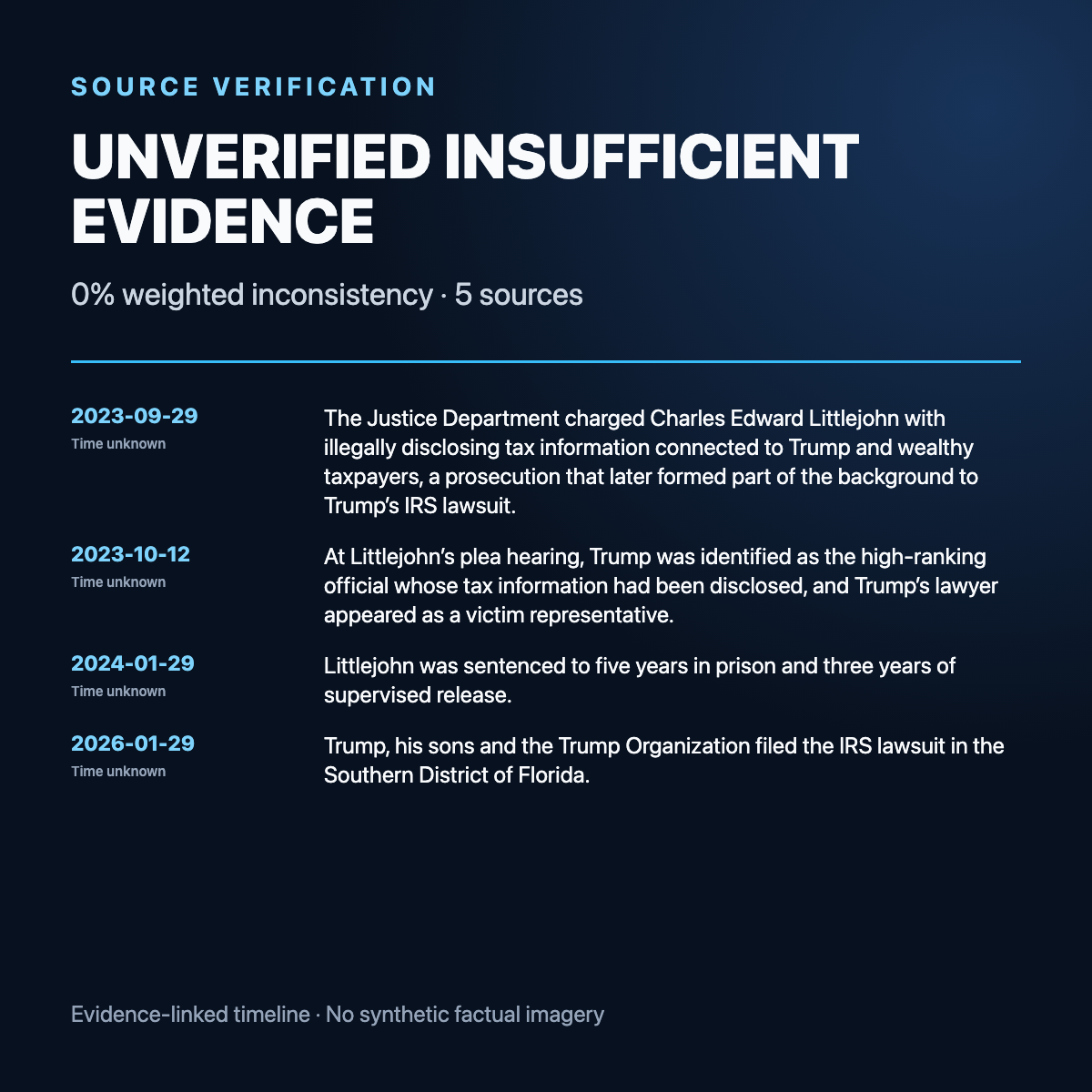
Verification result: unverified insufficient evidence, because the full central claim’s response element is directly supported by only one independent reporting family even though the ruling itself is strongly documented. [S1][S7]
The strongest evidence is Judge Kathleen Williams’s July 13, 2026 order, which found the case sought judicial legitimacy for an agreement conferring immunity and earmarking taxpayer money. [S1]
The order barred the parties from using, offering, admitting or citing the purported settlement agreement in official proceedings. [S1]
Independent reports by the Associated Press and The Guardian corroborate that Williams said the lawsuit was filed for an improper purpose and that the settlement included tax-audit immunity and a roughly $1.8 billion fund. [S4][S6]
The disciplinary portion is corroborated by the court order and press reports: Alejandro Brito was referred to The Florida Bar, and copies were directed to disciplinary authorities associated with Todd Blanche and Stanley Woodward. [S1][S7]
The chronology is well supported: Trump’s side filed the case on January 29, 2026, dismissed it on May 18, non-party movants challenged the dismissal on May 27, and Williams entered the order on July 13. [S1]
The Washington Post supplies the key response evidence, quoting DOJ as denying collusion and reporting that Trump’s legal team emphasized a rogue politically motivated leak of private tax information. [S7]
No validated contradictions were supplied, but the limitation is that only the Washington Post excerpt directly supports the claim about Trump’s side responding by focusing on the tax-record leak. [S7]